


UpdatedDec 1, 2025
PublishedFeb 9, 2021
Packagecom.dts.freefireth
MD52d795ac40e89ac2e037baadd0562084a
SHA1 (signer)29:6A:2D:81:0A:3E:00:24:D9:0F:4C:A3:77:AF:EF:1B:A6:40:6B:93
Signed byCN=Android, OU=Android, O=Google Inc., L=Mountain View, ST=California, C=US
Architecturesarm64-v8a
Malware scanTRUSTED
Websitehttps://ff.garena.com
Contact[email protected]
Privacy policyView
What's new
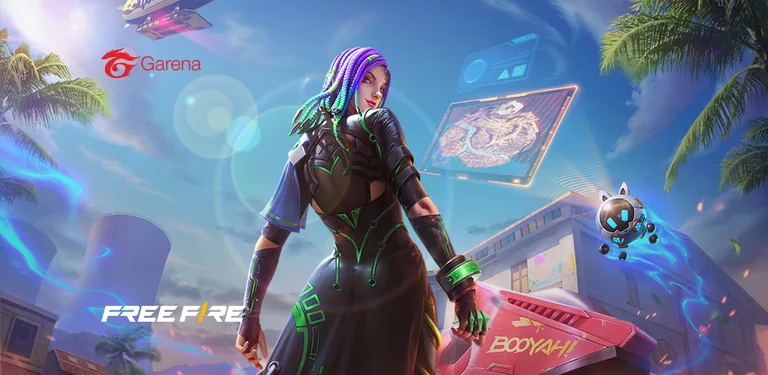
[Jujutsu Kaisen Collaboration] Explore FF-style Jujutsu High, meet Yuji Itadori and other friends, and unleash iconic Jujutsu like the Malevolent Shrine, and Unlimited Void. Fight like a true sorcerer!
[New Character - Morse] Like an untraceable byte, Morse turns invisible to slip into enemy lines.
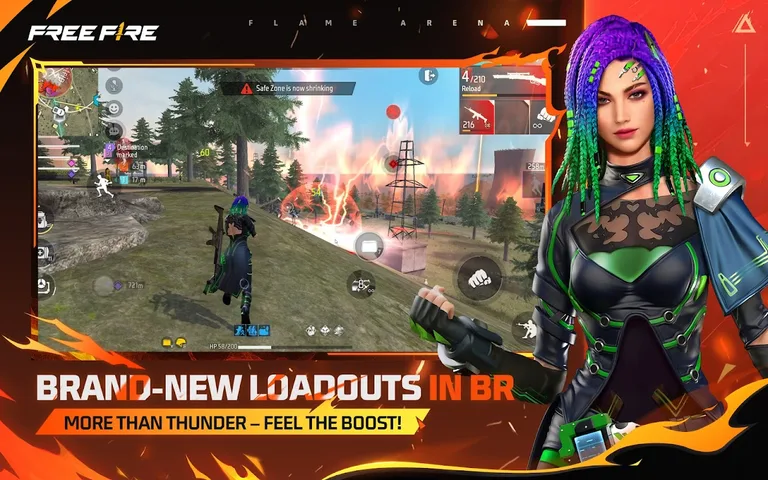
[BR Revivals] More revive chances in BR for solo and team. Spectating a teammate gives them a discount on revive cards.
[Camera System] New filters and free camera controls for creative shots.
[New Character - Morse] Like an untraceable byte, Morse turns invisible to slip into enemy lines.
[BR Revivals] More revive chances in BR for solo and team. Spectating a teammate gives them a discount on revive cards.
[Camera System] New filters and free camera controls for creative shots.
Description
Free Fire is a battle royale game built around short survival encounters in which players compete within a progressively shrinking combat zone. It functions on Android devices along with other supported platforms and prioritizes quick movement, concise decision-making, and controls designed for mobile interaction. Sessions unfold rapidly, relying on exploration, equipment collection, and engagements that typically take place at close or medium range.
Game elements are arranged through a central hub that separates characters, modes, and progression tools into distinct areas. This hub acts as the gateway to all activities, allowing players to choose a mode, adjust configuration settings, or review cosmetic items accumulated over time before transitioning directly into active matches.
Each round begins with an aerial approach that allows players to choose where to land on the island. Different regions offer varied cover, loot availability, and terrain features that shape the opening minutes. Once on the ground, weapons, armor, and healing items can be collected from buildings, scattered structures, and natural zones. As the safe area tightens, movement becomes essential and often leads to unplanned encounters as players cross paths.
Weapon categories follow recognizable behavior patterns. Rifles, SMGs, shotguns, and sniper rifles differ in recoil, range, and firing rhythm, giving each combat situation a distinctive pace. Throwable items add situational flexibility that supports close-quarters or defensive actions. Touch-based controls manage aiming, movement, and inventory interactions, and users may reconfigure layout elements or sensitivity settings to reflect personal preference.
The character system introduces additional variation. Figures such as Kelly, Hayato, and Moco represent stable entries in the roster, each tied to an attribute that affects movement, durability, or awareness. Progression resources like fragments and gold modify these traits, creating combinations suited to solo or squad configurations. These adjustments do not alter the underlying rules of each round, ensuring that match flow remains consistent regardless of character choice.
To practice mechanics without competitive pressure, the game provides a training environment where weapons, targets, and open space support experimentation. Players can observe recoil behavior, refine movement transitions, and examine firing patterns across categories. The setting offers a clear view of equipment performance before entering live matches.
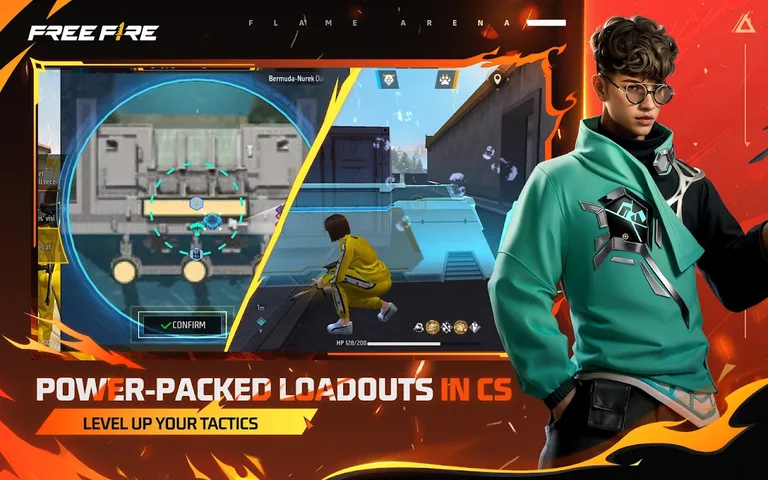
Additional modes complement the standard battle royale format. Some compress the action into smaller areas, emphasizing quick encounters, while others adopt a round-based structure where teams purchase equipment at the start of each stage. Because all loadouts reset at the end of every match, these modes encourage adaptation rather than persistent progression.
Team-oriented features enable coordinated play. Friends can be added through in-app tools, and squads are assembled before entering a round. Communication is handled through preset messages and voice chat, which support information sharing about movement, encounters, or threats. Guilds extend this social layer by grouping players into longer-term communities connected through shared identifiers and activities.
Cosmetic customization contributes to visual differentiation. Items such as outfits, weapon skins, surfboards, and emotes are arranged in a collection interface that allows players to rotate between options without affecting gameplay performance. Availability may vary depending on developer configuration or regional factors, but all items remain purely aesthetic.
Settings cover a wide range of options, including graphics, audio, HUD layout, and handling preferences. Players can adjust minimap orientation, auto-pickup behavior, and aim-assist parameters in modes where they apply. Graphics tiers accommodate different Android hardware, helping maintain stable presentation during matches.
The island’s layout plays a central role in match progression. Urban environments create vertical engagements and narrow lanes, while open fields require careful repositioning to avoid long-range threats. Forests, ridges, and isolated compounds diversify movement routes and support varied approaches to combat. Prominent landmarks provide orientation points that guide exploration and late-game rotations.
Progression across devices is preserved through account synchronization, which tracks characters, cosmetics, and accumulated resources. Linking services allow users to carry their data between platforms when switching devices. Security tools help safeguard linked accounts and notify users of significant changes.
Events appear periodically with structured tasks that reward cosmetic items or progression resources. These activities operate within the standard gameplay framework and do not modify the objectives of any round. Availability may depend on platform policies, regional guidelines, or developer decisions, particularly for cosmetics or event-related content.
Free Fire shapes its experience around short rounds, flexible movement, and a progression structure that integrates character attributes with equipment selection. Its design accommodates solo, duo, and squad formats, supporting different approaches to survival gameplay. The combination of terrain variety, adaptable controls, and steady match pacing creates an environment focused on clear encounters and moment-to-moment decision-making.
Game elements are arranged through a central hub that separates characters, modes, and progression tools into distinct areas. This hub acts as the gateway to all activities, allowing players to choose a mode, adjust configuration settings, or review cosmetic items accumulated over time before transitioning directly into active matches.
Each round begins with an aerial approach that allows players to choose where to land on the island. Different regions offer varied cover, loot availability, and terrain features that shape the opening minutes. Once on the ground, weapons, armor, and healing items can be collected from buildings, scattered structures, and natural zones. As the safe area tightens, movement becomes essential and often leads to unplanned encounters as players cross paths.
Weapon categories follow recognizable behavior patterns. Rifles, SMGs, shotguns, and sniper rifles differ in recoil, range, and firing rhythm, giving each combat situation a distinctive pace. Throwable items add situational flexibility that supports close-quarters or defensive actions. Touch-based controls manage aiming, movement, and inventory interactions, and users may reconfigure layout elements or sensitivity settings to reflect personal preference.
The character system introduces additional variation. Figures such as Kelly, Hayato, and Moco represent stable entries in the roster, each tied to an attribute that affects movement, durability, or awareness. Progression resources like fragments and gold modify these traits, creating combinations suited to solo or squad configurations. These adjustments do not alter the underlying rules of each round, ensuring that match flow remains consistent regardless of character choice.
To practice mechanics without competitive pressure, the game provides a training environment where weapons, targets, and open space support experimentation. Players can observe recoil behavior, refine movement transitions, and examine firing patterns across categories. The setting offers a clear view of equipment performance before entering live matches.
Additional modes complement the standard battle royale format. Some compress the action into smaller areas, emphasizing quick encounters, while others adopt a round-based structure where teams purchase equipment at the start of each stage. Because all loadouts reset at the end of every match, these modes encourage adaptation rather than persistent progression.
Team-oriented features enable coordinated play. Friends can be added through in-app tools, and squads are assembled before entering a round. Communication is handled through preset messages and voice chat, which support information sharing about movement, encounters, or threats. Guilds extend this social layer by grouping players into longer-term communities connected through shared identifiers and activities.
Cosmetic customization contributes to visual differentiation. Items such as outfits, weapon skins, surfboards, and emotes are arranged in a collection interface that allows players to rotate between options without affecting gameplay performance. Availability may vary depending on developer configuration or regional factors, but all items remain purely aesthetic.
Settings cover a wide range of options, including graphics, audio, HUD layout, and handling preferences. Players can adjust minimap orientation, auto-pickup behavior, and aim-assist parameters in modes where they apply. Graphics tiers accommodate different Android hardware, helping maintain stable presentation during matches.
The island’s layout plays a central role in match progression. Urban environments create vertical engagements and narrow lanes, while open fields require careful repositioning to avoid long-range threats. Forests, ridges, and isolated compounds diversify movement routes and support varied approaches to combat. Prominent landmarks provide orientation points that guide exploration and late-game rotations.
Progression across devices is preserved through account synchronization, which tracks characters, cosmetics, and accumulated resources. Linking services allow users to carry their data between platforms when switching devices. Security tools help safeguard linked accounts and notify users of significant changes.
Events appear periodically with structured tasks that reward cosmetic items or progression resources. These activities operate within the standard gameplay framework and do not modify the objectives of any round. Availability may depend on platform policies, regional guidelines, or developer decisions, particularly for cosmetics or event-related content.
Free Fire shapes its experience around short rounds, flexible movement, and a progression structure that integrates character attributes with equipment selection. Its design accommodates solo, duo, and squad formats, supporting different approaches to survival gameplay. The combination of terrain variety, adaptable controls, and steady match pacing creates an environment focused on clear encounters and moment-to-moment decision-making.
Required features
- Bluetooth android.hardware.bluetooth
- Screen Landscape android.hardware.screen.landscape
- Screen Portrait android.hardware.screen.portrait
- Wifi android.hardware.wifi
Permissions (30)
Free Fire requests the following Android permissions:
- Access Adservices Ad Id android.permission.ACCESS_ADSERVICES_AD_ID
- Access Adservices Attribution android.permission.ACCESS_ADSERVICES_ATTRIBUTION
- Access Network State android.permission.ACCESS_NETWORK_STATE
- Access Wifi State android.permission.ACCESS_WIFI_STATE
- Authenticate Accounts android.permission.AUTHENTICATE_ACCOUNTS
- Bluetooth android.permission.BLUETOOTH
- Bluetooth Connect android.permission.BLUETOOTH_CONNECT
- Camera android.permission.CAMERA
- Change Network State android.permission.CHANGE_NETWORK_STATE
- Foreground Service android.permission.FOREGROUND_SERVICE
- Foreground Service Media Projection android.permission.FOREGROUND_SERVICE_MEDIA_PROJECTION
- Internet android.permission.INTERNET
- Manage Accounts android.permission.MANAGE_ACCOUNTS
- Modify Audio Settings android.permission.MODIFY_AUDIO_SETTINGS
- Post Notifications android.permission.POST_NOTIFICATIONS
- Receive Boot Completed android.permission.RECEIVE_BOOT_COMPLETED
- Record Audio android.permission.RECORD_AUDIO
- Set Wallpaper android.permission.SET_WALLPAPER
- Use Credentials android.permission.USE_CREDENTIALS
- Vibrate android.permission.VIBRATE
- Wake Lock android.permission.WAKE_LOCK
- Com Android Vending Billing com.android.vending.BILLING
- Com Android Vending Check License com.android.vending.CHECK_LICENSE
- Com Dts Freefireth Dynamic Receiver Not Exported Permission com.dts.freefireth.DYNAMIC_RECEIVER_NOT_EXPORTED_PERMISSION
- Com Dts Freefireth Permission C2d Message com.dts.freefireth.permission.C2D_MESSAGE
- C2dm Permission Receive com.google.android.c2dm.permission.RECEIVE
- Finsky Permission Bind Get Install Referrer Service com.google.android.finsky.permission.BIND_GET_INSTALL_REFERRER_SERVICE
- Gms Permission Ad Id com.google.android.gms.permission.AD_ID
- Com Samsung Android Mapsagent Permission Read App Info com.samsung.android.mapsagent.permission.READ_APP_INFO
- Com Seagroup Spark Sdk com.seagroup.spark.sdk